


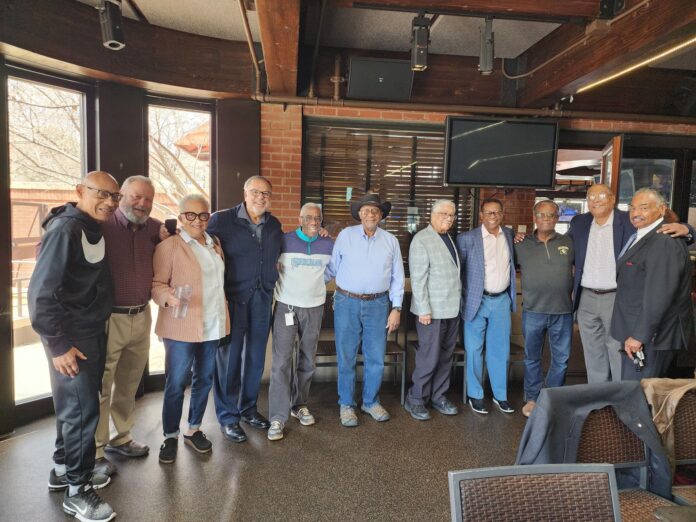
When seven Black attorneys gathered in Denver in 1971 to form what would become the Sam Cary Bar Association, they were much more than colleagues meeting to network; they were pioneers confronting a legal system that routinely excluded them from leadership and influence.
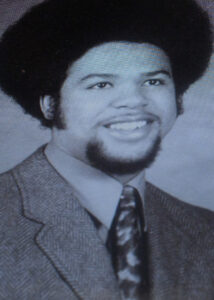
“When I entered the practice in 1970, there were 15 Black attorneys in the state of Colorado out of about 5,000 lawyers,” recalled Judge Gary Jackson, one of the founders. “Every single day I would be the only Black person in the room.”
Then serving as the only Black district attorney in Denver, Jackson was assigned to the courtroom of Judge Zita Weinshienk, who was the first female Municipal Court judge in Denver at the time and who became the first female Denver District Court judge in 1972.
“It was the best thing that ever happened to me,” he said. “She was brilliant. And she didn’t blink when I showed up with a 3-inch afro and platform shoes.”
More than 50 years later, SCBA continues to expand Colorado’s legal profession through mentorship, professional development, advocacy and community engagement.
Jackson emphasized SCBA’s founders did not think of themselves as separating from other associations but as “trying to level the playing field.” He explained, “We came together because we wanted a welcoming space where we could meet, talk and strategize.”
Bar leadership statewide was overwhelmingly white in the 1970s, and informal networks that fueled advancement were largely inaccessible to lawyers of color.
“The time was ripe for change,” said Jackson, following the assassination of Martin Luther King Jr. and the ongoing Vietnam War.
For Jackson and his colleagues, all of whom were activists in law school, progress required organization, and SCBA was the answer.
A Name Rooted in History and Resilience
The association’s name reflects its mission. Samuel Cary was a Black attorney who practiced in Denver in the first half of the 20th century, serving clients often overlooked by the legal system. He was disbarred in 1926 by the Colorado Bar Association but reinstated in 1953. Jackson, SCBA’s historian, said the disbarment was fueled by racism. For the founders of SCBA, Cary’s career illustrated commitment tempered by discrimination.
Building a Network with Purpose
In its early years, SCBA focused on strengthening the professional standing of Black attorneys while advocating for broader representation across the legal system. Meeting in homes and private offices, members worked to ensure Black lawyers were considered for judicial appointments, prosecutorial roles, bar leadership positions and committee assignments.
With time, SCBA has emerged as a professional anchor and a pipeline, connecting attorneys to roles in which they can influence policy, jurisprudence and public trust. Members are frequently asked to provide insight on measures in the state legislature and participate on legal panels and organizations nationwide.

Joyce Akhahenda, treasurer of SCBA and chief deputy with the Office of the Colorado State Public Defender, said the association provides camaraderie and encouragement. She has served in the public defender’s office for 20 years. “It’s always been a roller coaster, but I feel like I am needed,” she said.
As with SCBA’s mission, Akhahenda hopes to recruit diverse students to public defense, saying, “We want to get more Black students and students of color interested in doing public defense work.”
Each year, she anticipates SCBA’s homecoming, where all members “get together and do a roll call,” she said. “They talk about what they’re doing now, and it enables the younger lawyers to see all these people who have overcome so much and where they are now.”

Elevating Legal Leaders
The association’s impact is evident in the number of members who have gone on to serve as prosecutors, judges, law firm partners and civic leaders.
Several members have risen to the highest levels of the judiciary, including service on the Colorado Supreme Court and the federal bench. Their careers reflect the association’s commitment to excellence, public service and fairness, reinforcing the idea that diversity in leadership strengthens the legal system as a whole, noted Jackson.
He added, “Simply being in the courtroom” successfully challenged assumptions about who belongs in positions of authority.
Jackson himself was appointed in 2013 to Denver County Court judge, serving until retiring in 2020. His honors, mirroring the success of SCBA, include the Wiley Branton Award from the National Bar Association, CBA’s Award of Merit, the Norman Early Lifetime Award from the National Black Prosecutors Association and the Judicial Excellence Award for County Court Judge of the Year from the Colorado Judicial Institute.
Jackson’s his most cherished award is his induction to the NBA’s Fred Gray Hall of Fame, he said, as the NBA was formed as a result of Black lawyers being excluded from the American Bar Association until the 1950s.
Women Enduring Impact on SCBA
Women have played an essential role in SCBA since the beginning, with Gloria Monroe, then a public defender, holding the position of president in the organization’s second term.
SCBA’s legacy of inclusion was on display during Patricia Powell’s presidency in 1994. That year, two vacancies opened on the U.S. District Court for the District of Colorado, and three Black candidates were named finalists.
“Each of the Black nominees was more than worthy of appointment to the federal bench,” said Powell, who presided over SCBA’s endorsements of the candidates. Wiley Daniel was ultimately confirmed as the first Black person in the role. He later served as chief judge, as well as the first Black president of the Colorado Bar Association.
Powell later oversaw a second landmark endorsement when SCBA member Claudia Jordan was appointed to the Denver County Court, making her the first Black female judge in Colorado. “I felt so fortunate to lead our organization’s efforts in making history for a second time in a single year,” Powell said.
A Catalyst for Broader Inclusion
As the state’s first bar association for people of color, SCBA paved the way for the creation of other affinity bar organizations in Colorado, including those representing Hispanic and Asian Pacific American attorneys.
Annita Menogan, who served as SCBA president in 1995, recalled organizing a joint reception with Peggy Montaño, then president of the Colorado Hispanic Bar Association, to honor Judge Carlos Lucero and Daniel, who was endorsed by SCBA under Powell. Lucero had just been appointed to the 10th Circuit Court of Appeals, becoming the court’s first Hispanic judge.
The celebration nearly faltered when a heavy snowfall blanketed Denver. “We had invited more than 200 people and waited nervously to see if anyone showed up,” Menogan said. Despite the conditions, more than 100 guests, including both honorees, attended. “It demonstrated our communities’ commitment to celebrate the momentous occasion,” she said. “It was a party.”
Resilience in Action
In 2020, SCBA rapidly adapted to COVID policies even as overlapping national crises tested the association. When the pandemic shut down the country, SCBA canceled its signature events, including homecoming, the summer barbeque and the annual gala, its primary fundraiser.
SCBA’s adjustment to virtual meetings was soon overshadowed by the May 25, 2020, murder of George Floyd, which then-president Scott Evans said deeply affected the members and, for some, resurfaced painful memories.
SCBA’s executive committee released what Evans called the association’s “strongest and most impactful” statement. It was widely shared throughout Denver’s legal community.
Evans, a partner with Buchalter, said 2020 revealed SCBA’s “strength, intellect, compassion and resilience.”
Investing in the Next Generation
From the beginning, SCBA has invested in law students. The organization established the Sam Cary Scholarship Endowment Fund in 1986.
“The Endowment Fund is important because we were one of the first chapters of the National Bar Association to create its own charitable entity in 1986,” Jackson said. The fund has distributed several hundred thousand dollars to Black students from the University of Denver and the University of Colorado.
A Living Legacy
Despite progress, disparities persist more than 50 years after SCBA’s founding. About 5% of American attorneys are Black, and Black women represent less than 1% of all partners in U.S. law firms, according to the National Association for Law Placement.
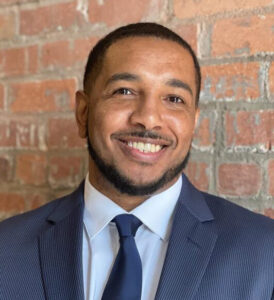
SCBA president Crist Whitney said the keys to countering disparities are embedded in SCBA’s founding mission: supporting each other, mentorship and advocacy. Many of SCBA’s 250 current members seek out ways to mentor younger attorneys.
Whitney learned about SCBA at a back-to-school barbecue when he was a student at the University of Colorado. A lover of history, Whitney quickly connected with Jackson. “Being able to hear about the struggles of different Black attorneys and what they had gone through to get to where they were was very helpful to my career,” he said.
Today Whitney serves at Rathod Mohamedbhai LLC as a civil rights attorney. “Sam Cary continues to be a safe space for us to gather, compare notes, see how people are feeling in these days,” he said.
He tries to pay forward what the association poured into him as a young lawyer. “When I run across a young law student, I invite them to coffee and make an introduction to (fellow SCBA members) so they can learn from them just as I did.”