

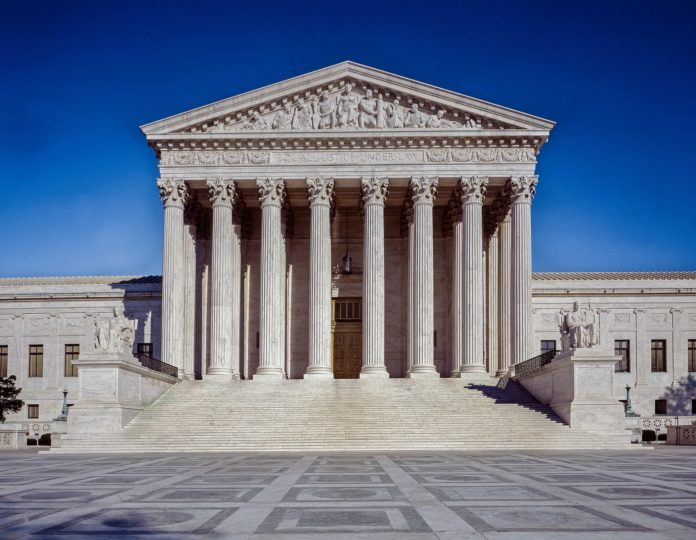
On Monday, the U.S. Supreme Court agreed to review the 10th Circuit Court of Appeals case of St. Mary Catholic Parish v. Roy (No. 25-581), which addresses questions concerning the scope of the Free Exercise Clause and the continued application of Employment Division v. Smith.
In 2020, Colorado voters approved a proposition that created a dedicated source of public funding for voluntary, universal preschool in the state. Following this vote, the state passed legislation and established a Universal Preschool Program (UPK). Parents at the school and others sued, challenging a section of UPK that requires all preschools receiving state funds to sign a nondiscrimination agreement. They argued that the requirement violated their First Amendment Rights and sought an injunction to prevent the nondiscrimination from being applied. The district court found that the nondiscrimination requirement did not run afoul of the First Amendment, denied injunctive relief, and entered final judgment.
On appeal, The Tenth Circuit, in affirming the ruling against the parish, concluded that the challenged government action was neutral and generally applicable under Smith, and therefore subject only to rational basis review. It determined that the parish failed to demonstrate the existence of categorical exemptions for comparable secular conduct or a system of individualized, discretionary exemptions sufficient to trigger strict scrutiny.
In granting certiorari, the Supreme Court will address the following questions:
1. Whether proving a lack of general applicability under Employment Division v. Smith
requires showing unfettered discretion or categorical exemptions for identical secular conduct.
2. Whether Carson v. Makin displaces the rule of Employment Division v. Smith only
when the government explicitly excludes religious people and institutions.
3. Whether Employment Division v. Smith should be overruled.
The case is expected to be argued during the October 2026 Term, with a decision by June 2027. Taken together, the case gives the Court an opportunity to clarify or recalibrate the Free Exercise doctrine, with potentially significant implications for how governments regulate in areas that intersect with religious institutions.