

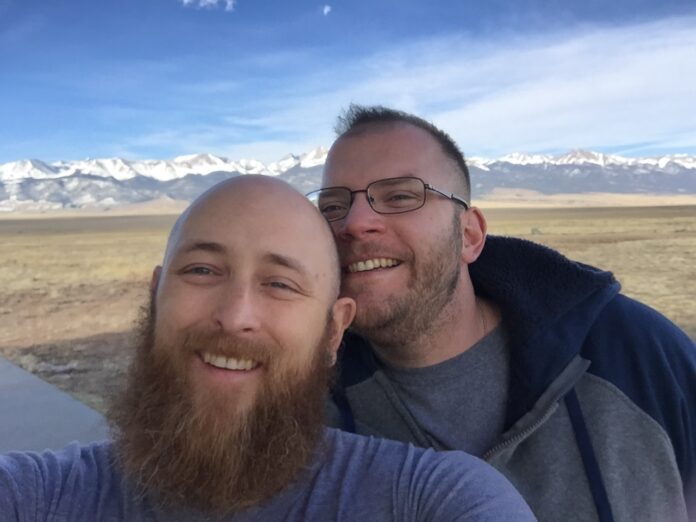
After not studying for and then not passing the bar exam more than once, David Vanstan Meyer launched a successful career in cybersecurity and focused on his relationships with his husband and son. But after his husband, Donny, was diagnosed with a severely debilitating health condition in 2015, Meyer stepped into the roles of caregiver and primary provider. He began rethinking nearly every part of his life, including his interest in law.
“We knew something was wrong when [Donny] slept for three days straight,” Meyer said. “It was very alarming.”
Six months later, a rheumatologist confirmed that Donny, a Marine veteran, was experiencing Gulf War Syndrome, a condition that includes chronic fatigue, fibromyalgia and irritable bowel syndrome, as well as post-traumatic stress disorder and depression.
“Those early days were filled with anxiety about the unknown. We had never read or heard about these symptoms before,” Meyer recalled. There is no cure for Gulf War Syndrome.
He became a full-time caregiver, assisting Donny with dressing, driving him places and maintaining the household. Meyer also returned to his law books, determined to help Donny receive the benefits to which he was entitled from the Department of Veterans Affairs for his service-connected disability.
Without yet having passed the bar, Meyer secured a 100% permanent and total disability rating for Donny, meaning the VA deemed Donny’s service-connected condition static and that he is completely disabled. This status granted him significant benefits, such as monthly VA disability compensation, medical care and property tax breaks. “This is a way to provide stability to veterans,” he said. “The VA recognizes that they served, that they suffered and that they deserve compensation.”
Inspired, and with Donny’s encouragement, Meyer took another stab at the bar exam a few months later. “It’s amazing what can happen when you study,” Meyer said, smiling. “I did this so that I can help others in a similar situation.”
Today, Meyer runs a law practice in Denver focused solely on veterans’ disability claims, in addition to maintaining his cybersecurity business and serving as a professor of law and cybersecurity. He also volunteers monthly with a pro bono legal clinic for veterans, Colorado Lawyers for Colorado Veterans, through the Colorado Bar Association.
In his practice, Meyer takes on about 14 disability claims a year. “It’s what I do to give back to others,” he said. “It’s much more than a hobby; it’s my calling.”
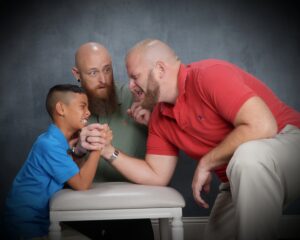
In 2025, Meyer was named a fellow with the Elizabeth Dole Foundation based on his work as a caregiver and his advocacy on behalf of veterans. He traveled to Washington, D.C., to meet with legislators about the impact of caregiving and to advocate for changes to the Civilian Health and Medical Program of the Department of Veterans Affairs. Under the current program, dependents of veterans with a 100% permanent and total disability rating from a service-connected condition receive medical benefits through age 22 if they are enrolled in college. The Elizabeth Dole Foundation is urging Congress to extend that cutoff to age 27, aligning the VA program with dependent coverage rules under the Affordable Care Act.
Closer to home, Meyer has met with Colorado Gov. Jared Polis to advocate for a proposed ballot initiative that would provide a property tax exemption not only for veterans with a 100% permanent and total service-connected disability but also for their caregivers. “It’s a simple policy fix that only affects about 2,000 families but would make a huge difference for them,” Meyer said.
As a personal project, Meyer has also been working with Colorado legislators to secure a full tuition waiver for dependents of veterans with a 100% permanent and total service-connected disability who attend a state college or university. “Colorado is one of only four states that does not currently provide a free college degree in these cases,” he said.
Polis has expressed support for the bill. “There are a lot of veteran families in Colorado, as we have a heavy military presence. Other states look to Colorado as an example when setting their own legislative agendas,” Meyer said.
An overarching theme of Meyer’s work is that caregivers make significant sacrifices to support veterans. “As caregivers, our lives have had to completely change, and it’s impacted our families’ economic mobility,” he said. “Even though we didn’t sign up for this, he’s my husband, and I’m going to do everything to take care of him and my son, no matter what. I made a commitment to do that.”
He continued, “So, yes, I wouldn’t choose anything else, but it has meant that I’ve had to forgo jobs with more responsibility, increased salary and the ability to save.”
That experience continues to drive Meyer to make time for veterans who are suffering, regardless of his family’s personal challenges. “It’s all about being seen,” he said. “Getting a veteran to 100% permanent and total is one of the most satisfying things I can do. It is life-changing for the veteran and, often, for others in their life.”