
At Rocky Mountain Veterans Advocacy Project (RMVAP), every day is Veterans Day. “Every day, we feel that obligation to try to give back however we can and to be of service as long as we can, especially to those Vietnam veterans who are moving into the later stages of their lives and need help — because they deserve it,” said Alice Hansen, founder and associate director of RMVAP.
Before founding RMVAP, Hansen served as a student attorney with the Veterans Advocacy Project at the University of Denver Sturm College of Law, where she earned her law degree with a concentration in public interest law. In 2020, she co-founded RMVAP with Bradley Cummings, Natalie Sanders and Payton Martinez. The four met as fellow volunteers with the Veterans Advocacy Project at Sturm.
Hansen said, “I have the lofty ideas, Brad has the powers of execution, and Natalie, who is very skilled in IT, built out a lot of our infrastructure; plus, they have really incredible legal minds.” While Hansen is not a veteran, Cummings served in the Air Force, and Sanders and Martinez have family connections to the military.
“It was a dream of ours to keep offering these legal services to veterans. We had seen that there was such a great need within the veteran community,” she said. “It was a form of paying respect to those who had sacrificed so much.” RMVAP’s services are free or low-cost, thanks to grants and donations.
Much of RMVAP’s work focuses on discharge upgrades and Veterans Affairs (VA) disability benefits compensation.
Veterans struggling with mental health challenges or trauma are more susceptible to being discharged with “anything other than an honorable discharge,” which can lead to the denial of VA benefits, Hansen said. In some instances, veterans have received undesirable discharges due to circumstances associated with post-traumatic stress disorder, anxiety disorder, military sexual trauma or a brain injury.
In 2025, RMVAP successfully argued for seven discharge upgrades, with more than 100 reviews currently in process.
As for VA disability benefit compensation, RMVAP helps veterans secure benefits they might be eligible for “in recognition of the effects of disabilities, diseases or injuries incurred or aggravated while serving in the military,” Hansen said.
Today, RMVAP represents 400 to 500 veterans a year and connects many more to resources. “We can get 15 to 20 requests a day,” Hansen said. As an organization, RMVAP has successfully argued for more than $22 million in lifetime benefits for veterans.
“To me, the success stories that are the most meaningful show how a success in one of these legal areas has a ripple effect on an entire life,” she said.
The RMVAP team has seen this time and again in their work with veterans on the Navajo Nation, the largest tribal nation in the United States. About two years ago, for example, members of RMVAP connected with a Navajo veteran who was severely disabled from his time in Vietnam and, alongside his wife, at risk of homelessness.
“We had numerous calls and two meetings in person over the course of a year,” Hansen recalled. “When, at one point, he mentioned PTSD [post-traumatic stress disorder], I looked at his file, and his symptoms had been mischaracterized; they had not been at all connected to his boots-on-the-ground service.”
RMVAP facilitated a third-party mental health evaluation, and after an extended review, the veteran received full compensation benefits for his service-connected disability. “This has created housing stability for them and a much safer living situation,” she said. “Now he also is eligible for VA health care, and they have access to income that can support them and that acknowledges their disability and their sacrifice and service.”
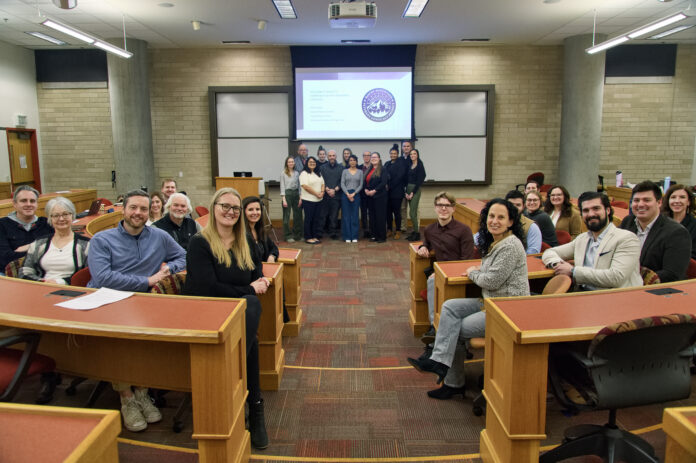
In a nod to the nonprofit’s start, RMVAP partners with the Veterans Advocacy Project at Sturm to provide legal externship opportunities each semester. “The goal is not that everyone will go off to practice veterans law but to expose students to it,” Hansen said. “Perhaps they’ll take on one or two pro bono cases a year or approach their careers with the insight of having served at a nonprofit.”
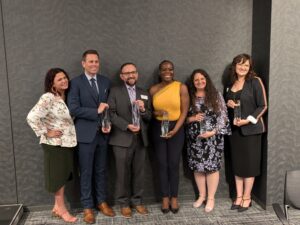
In 2024, in recognition of work upholding the values and traditions of the legal profession, the Denver Bar Association recognized RMVAP with the Outstanding Program or Project Award.
As for Hansen, “There are huge gaps for people in marginalized groups, like veterans, when it comes to law services, and for me, that belief has only been strengthened through this work,” she said. “We are grateful for the opportunity to serve those who have served.”