

A new study from the Association of American Law Schools presents one of the clearest pictures yet of the professional lives of women attorneys who hold top leadership positions in colleges and universities.
The report, “Women Attorneys in Higher Education Leadership,” released in November, documents the progress and obstacles facing women lawyers serving as presidents, provosts and deans in higher education. The findings reveal a mixed experience: While women attorneys in higher education have negotiated competitive salaries, their pathways

to academic leadership have been almost universally shaped by bias, and the number of women attorneys in leadership roles in higher education has plateaued.
The study is co-authored by Katie Kempner, AALS associate director of research and data analytics, and Kate Schaffzin, director of the Institute for Professional Leadership and Douglas A. Blaze Distinguished Professor of Law at the University of Tennessee Winston College of Law.
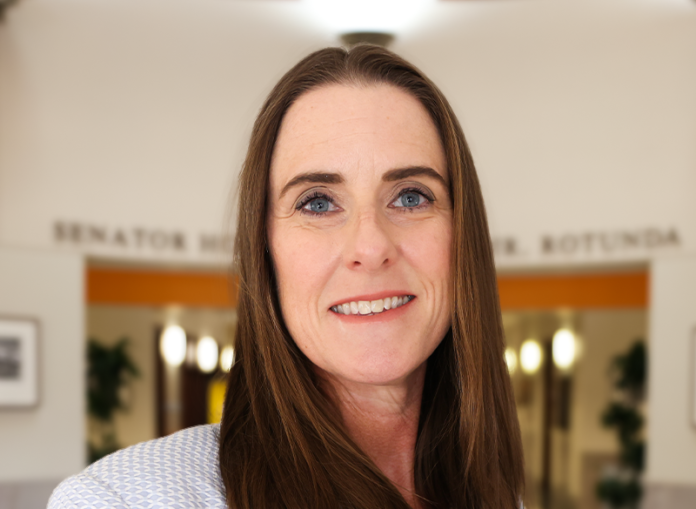
“My experiences as a dean influenced me to look deeper at the challenges faced by women attorneys even at the highest levels of academic leadership,” said Schaffzin, who led the University of Memphis Cecil C. Humphreys School of Law as dean from 2018 to 2024. “I hope this study helps highlight the courage and strength of women leaders, share their strategies for success and encourage institutions to better support and develop networks to improve the pathways to leadership.”
The co-authors contacted 274 women attorneys identified as current or former leaders in higher education in 2025; 121 provided feedback. Roughly two-thirds of respondents were current or former law school deans. Additional respondents included current college and university presidents, former interim deans and former presidents. About 67.5% identified as white (a number similar to the broader population of law school deans); 21.1% identified as Black.
Legal training is leadership training
“We knew that the legal training prepares law attorneys well for higher education leadership, especially today,” said Schaffzin.
She explained, “This is a moment for attorneys in general because of their knowledge in free speech, employment protections and academic freedoms, as well as because of the changing landscape with affirmative action with admissions and with diversity programs being targeted by the Department of Justice and the Department of Education. They are extremely well suited with their technical skills and problem-solving skills.”
Furthermore, women attorneys are ideal leaders “for this moment,” she said, since “leadership requires not only responding to and adjusting to external factors and stakeholders but also being accountable to your internal community.”
Kemper continued, “It’s the combination of these technical skills and the more interpersonal skills and attitudes that women bring to these roles — that emotional intelligence.”
Some of those interpersonal skills are described in the study, with those surveyed pointing to technical and social leadership qualities as essential to their advancement. Attributes selected by respondents as most helpful to their success as a leader were:
- Good judgment:8%
- Integrity:2%
- Hard work:9%
- Emotional intelligence:3%
Respondents acknowledged talent alone was not responsible for their success. More than three-quarters reported that mentors and colleagues played a direct role in their professional advancement. In most cases, a mentoring relationship developed organically after the mentor reached out to the mentee.
Complex compensation and educational data
A few results surprised Schaffzin and Kemper, including their data on compensation. More than 60 percent of current women leaders reported earning more than their male predecessor.
“Even though we saw a higher number of women who were reporting making more than their predecessors, when we heard the back stories in our focus group, there was a lot of resentment about how those salaries were negotiated,” Schaffzin said. In some cases, for example, the initial total compensation and rewards offer was lower than the predecessor’s, or the predecessor was much less qualified.
The co-authors also were surprised by the respondents’ highly varied educational backgrounds, which echoed Schaffzin’s personal experience. A first-generation college student, she did not attend the best law school to which she was admitted, due to finances, and she was long into her educational journey before deciding to become a law professor.
Seeing ‘someone like them’ leading
Despite the deep skill set that women attorneys can bring to higher education, nearly three-quarters of respondents said they experienced gender bias in their most recent leadership roles, and many described forms of intersectional bias linked to race or ethnicity. About 70% of respondents “agreed that people were/are surprised to see someone like them succeed in a higher education leadership role,” according to the study.
Concerns about appearance and presentation weighed heavily. A significant number of women said they felt pressure to pay more attention to how they looked once they stepped into a leadership role compared to male peers and earlier stages in their careers.
Although safety concerns were not widely reported, about a quarter of respondents reported they have felt unsafe based on their gender. “Many women leaders don’t want to publicly share these stories because it feeds into a narrative of women as weak,” Schaffzin said.
Recommendations for growth
The increase in women leaders in higher education has plateaued. The number of women serving as law school deans rose from 18% in 2005 to 41% in 2020. At the end of 2025, it stood at 40.8%.
Today, “statistically, if you have one woman as a finalist (for a position in higher education leadership), she has a zero percent chance of being appointed,” Schaffzin said. “And you often only see one woman, or finalists pools don’t have any. Universities can do a better job of opening the door for the consideration of women for these roles.”
To improve representation and workplace culture for women attorneys in higher education leadership, the report details several recommendations, including benchmarking to measure progress over time; institutions supporting mentoring and professional development targeted toward leadership pathways, and universities developing transparent compensation practices to reduce reliance on negotiation for pay equity.
The study is available from the AALS.