


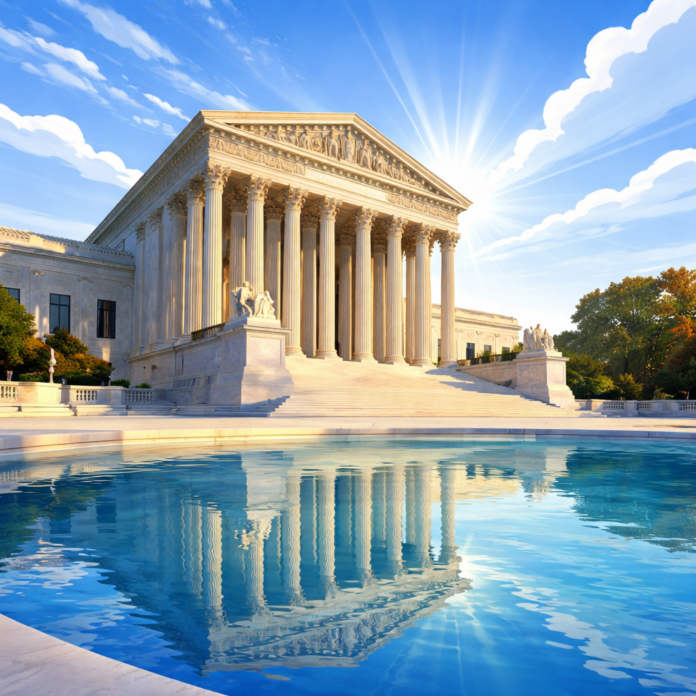
In an 8–1 decision issued Tuesday, the U.S. Supreme Court reshaped the legal landscape surrounding conversion therapy bans, rejecting Colorado’s prohibition as applied to talk-based counseling and setting up a potential clash over free speech and professional regulation.
At the center of Chiles v. Salazar is whether Colorado’s law regulating conversion therapy for minors impermissibly restricts speech or if talk therapy is conduct that can be regulated by the state as medical practice. The decision has implications for the more than 20 states that have similar laws barring conversion therapy.
The Court concluded Colorado’s statute targets speech based on viewpoint by limiting what licensed counselors may say to clients regarding sexual orientation and gender identity.
The ruling invalidates the Colorado law as applied to speech-based therapy but stops short of striking it down entirely. Instead, the Court remanded the case, leaving it to lower courts to determine whether the statute can survive strict scrutiny, the most demanding level of constitutional review.
Talk Therapy: Conduct or Speech?
Colorado argued the law targets harmful medical practices, or conduct, even if those practices involve communication.
Scott Skinner-Thompson, a professor and dean’s scholar at the University of Colorado Law School, filed an amicus brief supporting Colorado’s position. “Just because it happens to involve speech doesn’t mean that it’s not the practice of medicine,” he said. 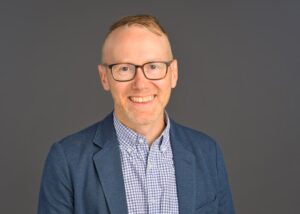
Olivia Mendoza, ACLU of Colorado executive director, agreed, “This is a matter of maintaining public health and professional ethical standards, not a matter of protected speech,” she said.
Writing for the majority, Justice Neil Gorsuch focused on speech regulation. “Colorado may regard its policy as essential to public health and safety,” Gorsuch wrote. “But the First Amendment stands as a shield against any effort to enforce orthodoxy in thought or speech in this country.”
Justice Ketanji Brown Jackson dissented, arguing the state was acting within its authority to regulate harmful professional practices and protect public health.
“This Court has weaponized the First Amendment,” Skinner-Thompson added. “State laws trying to protect LGBTQ people are going to be vulnerable.”
Strict Scrutiny Ahead
Colorado must now justify its law under strict scrutiny, despite copious medical evidence for banning conversion therapy, noted Skinner-Thompson.
“Colorado has as strong a shot as they could,” he said, “but this is a very exacting standard, and the Supreme Court has showed their cards.”
Jamie Buechler, a co-chair of The Center on Colfax, wrote in a response to the decision, “The Court ignored the medical community consensus, as well as many public findings, that such ‘therapy’ is harmful in numerous ways and results in ongoing PTSD and self-harm, if not self-deletion, by persons suffering from gender dysphoria.”
The case may also “open a door” for new challenges to professional regulation, said Skinner-Thompson, by framing the issue as speech rather than as conduct.
Beyond doctrine, the decision carries emotional weight for LGBTQ+ communities, particularly minors. “Colorado was a leader in protecting the LGBTQ+ community, especially trans persons,” Buechler said. “Yet almost at every turn, Colorado’s legal efforts are struck down.”
She continued, “The Chiles decision, coupled with the Masterpiece Cakeshop and the Creative decisions, trans persons will question whether they will be able to seek or even obtain proper, competent medical treatment, including mental health treatment, for their issues.”
Skinner-Thompson underscored the broader stakes. “It’s critically important for those who care about queer lives to affirm the sanctity of the lives of LGBTQ people,” he said. “Queer communities are resilient, and I hope that LGBTQ people realize that their value is found within and not externally.”
Colorado Gov. Jared Polis said he is “evaluating the U.S. Supreme Court ruling and working to figure out how to better protect LGBTQ youth and free speech in Colorado.”