



“I’m home.” That is the feeling I get every time I walk out of Denver International Airport and catch my first glimpse of the Rocky Mountains on the horizon. It grows stronger still when I crest Monarch Pass and cross the Continental Divide. From there, I know Gunnison—my home—is only 40 miles away. As a U.S. Navy JAG attorney who has spent much of my career stationed overseas, that moment is something I do not get to experience often.
Every soldier, sailor, Marine and airman has a similar moment when they finally feel “home.” For some, it’s being greeted by children and a dog on the front porch after deployment. For others, it’s gathering around a holiday table with people who have known them forever. Those moments matter. They remind us who we are, where we belong, and what it means to return to a community that never stopped claiming us.
For many Colorado attorneys practicing outside the state’s borders, that same sense of home can feel just as rare, and just as cherished. Whether a military lawyer like me, a civilian federal practitioner, or in-house counsel living outside Colorado, a significant number of Colorado-licensed attorneys work far from the Centennial State. The Office of Attorney Regulation Counsel’s most recent Annual Report found that nearly one in five active Colorado attorneys list a primary work location outside Colorado. As remote work becomes more and more common, the number of non-local Colorado attorneys will likely only go up.
Across the country—and around the world—countless American lawyers practice away from the jurisdiction they consider home. And yet, state bar associations rarely focus on these attorneys or offer routine programming that recognizes their unique challenges. Most CLEs—appropriately—emphasize issues relevant within the state. Networking events and section programs naturally concentrate near bar headquarters or major cities. What this means, however, is that attorneys who maintain ties to Colorado while serving elsewhere often find no meaningful connection point to their home state bar.
For lawyers who practice thousands of miles from Colorado, the physical distance often amplifies the emotional distance. Military attorneys rotate frequently, move between duty stations and work in high-tempo, high-responsibility environments. Civilian lawyers serving in federal agencies, law enforcement, regulatory bodies and national security roles may spend decades away from their home states and can also be required to transfer between regional offices to advance their careers. For all of them, the professional community anchored in their licensing jurisdiction can be a powerful source of stability—if the bar creates avenues for connection.
The Colorado Bar Association’s Vision Statement promises that the CBA “will be the leader in providing members throughout the state with the tools to be successful, a community within which to build relationships, and the focus to successfully navigate the future.” It is absolutely a laudable aspiration. But its focus on “throughout the state” unintentionally overlooks the thousands of Colorado lawyers who represent the state’s legal community from elsewhere. Many of us continue to think of Colorado as our home and where we are from. Yet our distance can create the sense that we exist on the periphery of a community we still consider central to our professional identity.
When American Bar Association Young Lawyers Division Chair Tamara Nash adopted the theme “Welcome Home” in 2023, the message resonated deeply with young federal and public service lawyers—especially those who, like me, have built careers beyond their home states. I am proud of my military service, but that pride does not erase the occasional feeling of disconnection from my state bar, its programming, and the professional relationships that give meaning and continuity to a lawyer’s career.
This is not a criticism of the CBA. With the overwhelming majority of Colorado attorneys residing within the state, it is only natural that most programming focuses on them. But we should also recognize the opportunity before the CBA: the chance to reaffirm that Colorado lawyers are part of the Colorado legal community no matter where they live or serve. The association can strengthen its support for the other 20% and, in doing so, broaden the reach and influence of the Colorado bar as a whole.
To better serve non-local Colorado lawyers, there are a number of steps the CBA could take. These steps would complement, not compete with, the CBA’s excellent in-state programming for members in Colorado.
First, the CBA could establish recurring networking events in major hubs with concentrations of Colorado-licensed attorneys. Cities like Washington, D.C., Los Angeles and Chicago host large communities of military, federal and government attorneys—many of whom maintain Colorado licensure. Annual or semiannual meet-ups would create connection points and help cultivate communities tied to the CBA, even far from the Front Range.
Second, the CBA should expand programming tailored to federal, military and public sector lawyering. Federal practice often involves specialized subject-matter expertise and professional challenges distinct from state and local practice. CLEs, webinars and articles focusing on federal administrative practice, national security, military justice or agency counsel work would meet a need that many Colorado attorneys currently look elsewhere to fill. Though the ABA already does a great job providing nationwide programming, the CBA could use this as an opportunity for Colorado attorneys to connect around similar interest areas. Additionally, offering an annual “ethics roadshow” in major concentrations of Colorado attorneys would help us connect while also fulfilling our state ethics CLE requirements.
Third, the CBA can strengthen advocacy on behalf of public service attorneys. The association already supports important initiatives related to access to justice, rural practice, and legal professionalism. There is room to add advocacy for federal and military practitioners—whether through support for student loan relief programs, improved access to mental health resources, or training opportunities for lawyers in high-stress service roles.
Finally, the CBA should consider waiving annual registration fees for active-duty JAG officers. Many jurisdictions already do so. Such a policy would reflect respect for military service, lighten a financial burden borne by mobile service members, and reinforce the CBA’s commitment to supporting those who serve Colorado while serving the country.
Much like the ABA YLD, the CBA can do more to make federal and public service attorneys feel welcome—no matter where their service takes them. This year, I invite the CBA to explore new ways to support Colorado’s military, government, and public sector lawyers through expanded programming, outreach and recognition.
For me, “home” is stepping off a plane in Denver and seeing the Rockies for the first time in months. For others, it might be the sunrise over the eastern plains, a favorite hiking trail or a return to familiar streets and familiar people. Whatever “home” means, the CBA has an opportunity to extend that same feeling of belonging to every Colorado lawyer—wherever in the world they serve.
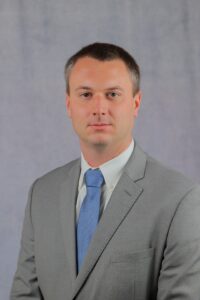
Lieutenant Nicholas Monck is an attorney in the U.S. Navy JAG Corps assigned to Navy Installations Command in Washington, D.C., though Gunnison is home for him. During his time in the Navy, he has been stationed in Hawaii, Guam and Maryland. He is the chair of the American Bar Association’s Standing Committee on Armed Forces Law and the Young Lawyers Division’s Government, Military, and Public Sector Committee. He is a member of the CBA’s Military and Veterans Affairs Section.
Editor’s note: The views expressed in this article are those of the author and do not reflect the official policy or position of the Department of the Navy, the Department of Defense, the U.S. government or Law Week Colorado.