



For 25 years, CASA of Jefferson and Gilpin Counties has worked to ensure that children who have experienced abuse and neglect have someone in their corner when decisions impacting them are made in court.
Since its founding in 2001, the nonprofit has served more than 5,700 children in the 1st Judicial District. Its volunteers provide a consistent presence in children’s lives, listening to their concerns and sharing their perspectives with the judges and magistrates overseeing their cases.
CASA was first envisioned in 1976, when Seattle Juvenile Court Judge David Soukup recognized that courts often lacked sufficient information about children when making decisions in abuse and neglect cases. By 1982, the national CASA organization formed, and in 1990, the U.S. Congress authorized its expansion by passing the Victims of Child Abuse Act.
Ten years later, 1st Judicial District Judge James Zimmerman felt the same pressure Soukup had experienced and wanted to take action. CASA of Jefferson and Gilpin Counties was established the following year.

“His goal was to bring in consistent, caring and independent volunteer advocates,” said Melissa Hellmuth, executive director of CASA of Jefferson and Gilpin Counties. “He wanted to ensure judicial officers could make more informed decisions.”
Today, there are 18 CASA agencies in Colorado working with 23 judicial districts.
A Voice for Children
CASA volunteers are appointed to individual dependency and neglect cases. Their role is to get to know a child and provide the court with information that might otherwise be difficult to gather.
Volunteers must be at least 21, pass a background check and commit to at least 18 months. No particular educational or professional background is required.
Once appointed, a volunteer spends time with the child, and their court-ordered role gives them access to people such as teachers and mental health providers who can help them understand the child’s circumstances.
The volunteer shares the child’s needs and wishes with the court, as well as their own observations and recommendations, through verbal updates and written reports.
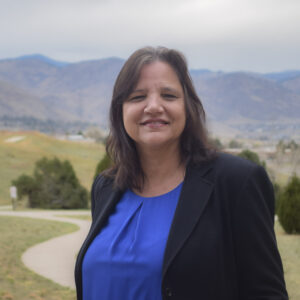
Toni-Anne Nuñez, the organization’s director of development, said, “We’re going to do whatever we can to support the children in the system and thereby support their families in the system and also thereby support the courts. The goal is to make everyone work more clearly together.”
The personal approach of the volunteer is critical. Hellmuth recalled a case in which a child was described by others as resistant to therapy. A CASA volunteer took time to talk with the child and learned the child had questions and uncertainties about therapy. Once the volunteer helped address those concerns, the child became willing to attend.
CASA relationships can last beyond the court case. Judge Lindsay Van Gilder often asks young people nearing the end of a case whether they have someone to call if their car breaks down or they find themselves in a difficult situation. According to Hellmuth, youth often identify their CASA volunteer.
Volunteers have attended graduations, weddings and funerals. Others step back when a case closes because a child or family needs to move on from a difficult period. “We respect that,” Hellmuth said.
During the most recent fiscal year, CASA served 221 children with the help of 226 volunteers, who contributed approximately 10,000 hours.
The matching process is collaborative, involving CASA staff, judges, magistrates, county attorneys and social workers. The limiting factor is the number of volunteers available.
“This is big work,” Hellmuth said. “We would love to have a CASA volunteer on in every case that needs a CASA volunteer.”
Expanding the Work
Over the years, CASA has adapted to changing needs in the child welfare system and the community.
In 2010, the organization began working with problem-solving courts, which use treatment-based approaches intended to promote rehabilitation and reduce recidivism.
Six years later, it became the first CASA program in Colorado to appoint volunteers to truancy cases.
In 2019, the organization launched Youth Alliance, a program developed by former executive director Leah Varnell after she recognized the challenges facing young people aging out of foster care without a permanent family. Those challenges can include housing instability, difficulty finding and keeping employment and navigating adult responsibilities without a support system.
Through a partnership with Foothills Regional Housing, Youth Alliance secured 30 apartments at AVi in Olde Town Arvada for young adults transitioning out of foster care.
For Hellmuth and Nuñez, the work also means recognizing the practical challenges that can affect a family’s stability during a case. Housing and transportation remain significant needs, and recent federal funding cuts and freezes have significantly affected programs families rely on.
A lack of transportation, for example, can make it difficult for a child to get to school or appointments, particularly after a change in placement. Housing instability can add pressure to families already facing difficult circumstances, said Nuñez.
Hellmuth said, “CASA is extremely fortunate to work with a strong network of community partners, including the courts, human services agencies, the 1st Judicial Bar Association and local organizations that can help address gaps in services. We could not do this work alone.”
Looking Ahead
With 2027 in view, Hellmuth said CASA wants to maintain its foundation in dependency and neglect cases while remaining open to other opportunities in the courtroom where volunteers could help fill a need, perhaps by expanding Youth Alliance.
For Hellmuth, the work is personal. She joined CASA in 2008 as a recruitment and training professional and spent 11 years with the organization before leaving for a fundraising position for a CASA chapter in the Reno-Tahoe area. She returned about two years ago and became executive director a little more than a year ago.
“I realized very early as the recruitment and trainer that this is an organization that makes lifelong change, and I want to be a part of it,” she said.
Nuñez said her motivation for service comes from the belief that people should use their time to make a difference in the lives of others. “My mantra is there, but for the grace of God, go I,” she said.
She and Hellmuth recently attended the adoption of an 8-year-old girl who had experienced significant trauma. Seeing the child celebrate her new permanent home was a reminder of what the work can mean, Nuñez said.
For the organization, that moment also reflects the purpose behind its first 25 years: making sure children have the support and advocacy they need as the court works toward a safe and stable future.
CASA relies on donations. Through Dec. 8, gifts through the COGives Foundation will be doubled. For other ways to get involved, a volunteer training class starts in January, and the organization’s largest fundraising event, Comedy for CASA, is Jan. 29.