



For attorneys in the Civil Division of the U.S. Attorney’s Office for the District of Colorado, representing the government sometimes means recognizing that winning a case is not the same as reaching the right result.
That distinction informs decisions about when to fight and how to exercise the government’s authority.
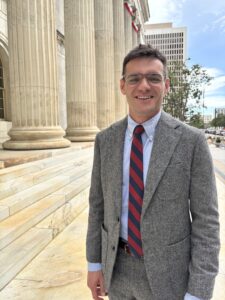
“Values, ethics, whatever rules you might point to, they’re really just words until they’re tested,” said V. “Bill” Scarpato III, an assistant U.S. attorney and senior litigation counsel who has been appointed to the 2nd Judicial District Court bench, effective in January.
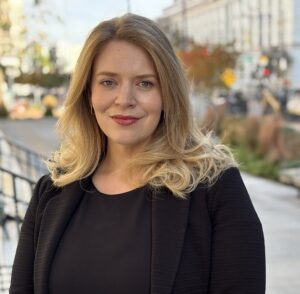
Scarpato and Jane Bobet Rejko, the division’s deputy chief, said the responsibility of representing the federal government extends beyond advancing a legal position. It requires attorneys to consider the government’s conduct, the strength of its arguments and the public interest at stake.
In practice, Scarpato said government attorneys may be more inclined to settle a case than their counterparts in private practice when they believe their side has done something wrong. When they believe the government’s position is legally defensible, they may be prepared to litigate through the end of a case, regardless of the financial stakes.
Representing the Public
A dispute over fencing on federal land near Mancos illustrates how government litigation can directly impact the public interest, Scarpato said.
After receiving reports that the Free Land Holder Committee had fenced off about 1,400 acres of the San Juan National Forest near Mancos, the government sued in November 2024 to stop further fencing and protect public access.
The area is used for horseback riding, mountain biking, cross-country skiing, livestock grazing and “lots of dog walking,” Scarpato said. Before the lawsuit was filed, nearby residents began removing the fencing themselves.
Some locals later became witnesses in United States v. Patrick Pipkin et al. Their involvement underscored for Scarpato that “the outcome mattered, especially to the people who used the land.”
He said his office has a saying: “In this job, you get to be the government that you want the government to be.” In this case, he wanted the community to see the government working toward a solution on their behalf.
The litigation required coordination with the U.S. Forest Service, whose specialists provided expertise on forest management, applicable rules and conditions on the ground. The USAO for the District of Colorado regularly works with more than a dozen federal agencies.
The government brought trespass claims and invoked the Unlawful Enclosures of Public Lands Act of 1885. Although the office handles land trespass cases multiple times a year, the 1885 statute “is not one that comes up every single day, which made it fun,” Scarpato said.
The case also gained attention when one of the defendants attempted to pay his court filing fees by leaving silver coins with a courtroom deputy.
For Scarpato, the case was an example of the variety he appreciates in government service.
“We interact with people from all walks of life and any constituency that you could think of in the state of Colorado: Fortune 500 business leaders to the unhoused, to ranchers, to members of local communities and everybody in between,” he said. “One of the things that makes this job special is that we truly serve and interact with the entire public. And this case was just one particular and eccentric example of that sort of thing that we see from a legal perspective.”
Curiosity Across the Law
This variety extends to the legal issues themselves. The Civil Division handles cases on behalf of the government as well as cases in which the government is defending its actions, giving attorneys opportunities to work across a range of legal fields.
“The breadth of what a civil USAO touches in a given day, a given year, is really one of the cool things about this job,” Rejko said.
On the affirmative side, attorneys bring trespass claims and False Claims Act cases involving alleged fraud in areas such as healthcare billing and government contracting. They also handle civil cases under the Controlled Substances Act, including matters involving prescribers and pharmacies accused of failing to comply with the law.
On the defensive side, attorneys represent the government in a similarly broad range of disputes, including cases involving the Administrative Procedure Act, the Freedom of Information Act, employment law and medical malpractice.
The subject matter can change dramatically from one case to the next. Attorneys may need to understand how a federal agency operates, consult specialists about technical questions or learn the details of a medical procedure.
“For attorneys who are curious about the world around them, the constant learning is one of the job’s greatest rewards,” Rejko said. “A lot of people work here because they’re interested in the law but also interested in people and how things work.”
Judgment in Practice
The span of the work requires attorneys to exercise judgment about the positions they take on behalf of the government.
Rejko described an office culture in which attorneys together grapple with difficult legal questions “while considering how to do the right thing.” Discussions with both colleagues and opposing counsel, she said, help attorneys assess the facts, sharpen their arguments and identify opportunities to resolve disputes without court intervention.
“We hold ourselves to a really high standard,” she added.
The office also places an emphasis on professional development. A formal mentorship program for new attorneys exists alongside an informal practice of colleagues sharing expertise and making time to help younger lawyers progress.
Rejko began her career clerking for a federal magistrate judge before working at law firms in New York. She has spent nearly eight years in USAO, including more than a year as deputy civil chief.
Scarpato joined the office after law school and a federal clerkship in Pennsylvania. He said the government attorneys he observed in court impressed him with their preparation and trustworthiness as advocates, leading him to USAO.
Cases of Note
One case that stands out in Scarpato’s career arose from protests against the Dakota Access pipeline in 2016 and 2017.
North Dakota sued the federal government over law enforcement response costs associated with protest camps on land managed by the U.S. Army Corps of Engineers. The case proceeded to a monthlong trial with dozens of witnesses.
The case “was fascinating from both a factual and historical perspective,” he said. Rejko also served on the case, delivering the opening statement.
Rejko recalled a separate employment case involving scientists at the National Institute of Standards and Technology. The jury trial gave her an opportunity to learn about the work of federal scientists while developing her trial skills.
From Advocate to Judge
In January, Scarpato is set to take on a different role in the justice system, following his appointment by Gov. Jared Polis to the 2nd Judicial District Court.
Scarpato said his years as a federal litigator have given him frequent opportunities to appear before judges and observe how they manage cases at different stages, helping him consider the kind of judge he wants to be.
As he prepares for the bench, he reflected on his time at USAO, saying, “It has been the privilege of my career working here.”
Scarpato is one of 10 attorneys who have moved directly from the USAO for the District of Colorado to either a state or federal judgeship in the last decade.