


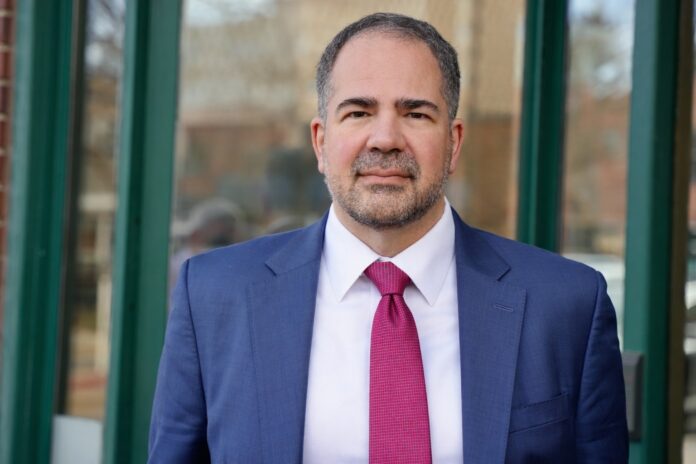
Olsky Law LLC recently secured a $3.1 million judgment in Boulder County District Court for client Michael Leago and his company, iHempX, in a multi-year dispute over the misappropriation of hemp assets.
Beginning in 2020 and spanning federal and Boulder County District Court proceedings, Front Range Harvest LLC v. Leago concerned a failed partnership with a California-based developer, who took possession of more than $4 million in hemp plants while denying a legal partnership existed.
After assuming the case on a contingency basis in May 2024, founding partner David Olsky obtained court sanctions against the defendant for the destruction of text message evidence.
The final award, comprising $1.65 million in damages and $1.5 million in fees and costs, affirms oral partnerships carry full legal weight.
Olsky discussed the path to the verdict with Law Week Colorado:
Law Week Colorado: This case has been described as a strong example of how courts are evaluating informal business relationships and addressing bad-faith conduct. How did those themes play out?
Olsky: The court closely examined what the parties actually did and said at the time of the relationship. The court looked carefully at contemporaneous communications — emails and texts — to determine the parties’ intent, rather than relying on a formal agreement. The court also spent significant time evaluating witness credibility to decide who it believed. Based on that full picture, the court ultimately concluded that one party had engaged in bad-faith conduct.
LWC: What makes this $3.1 million judgment stand out in the landscape of Colorado commercial litigation?
Olsky: What’s unique is the nature of the informal business relationship underlying the judgment. It is often very difficult to prove the contours of an informal business relationship. While large judgments in tort cases are more common, it is rarer to see a judge make this kind of significant assessment based on an informal business agreement.
LWC: How did the court approach the lack of formal agreements between the parties?
Olsky: The court did not treat the absence of a formal agreement as a failure on the part of the parties. Instead, it respected that many legitimate business ventures are conducted without written contracts, particularly where time and cost make formal agreements impractical.
The court evaluated the relationship from the parties’ perspective, assuming they were acting as sophisticated businesspeople, and focused on how the agreement functioned in practice. The court also recognized that, in reality, businesspeople do not always have the capacity to engage in lengthy legal processes to formalize agreements, which can later create disputes when one party attempts to change the terms.
LWC: What does this ruling suggest about the risks of relying on informal or handshake agreements?
Olsky: The ruling reinforces that handshake agreements can still be enforceable if they include consideration and clear key terms. At the same time, it highlights the risks of relying on them.
This case took years to litigate and required a judge willing to dig deeply into the facts. Formal agreements can help avoid that kind of time, cost and uncertainty. Without them, there is also a risk that one party will try to reinterpret the deal in their favor, knowing how difficult it is to prove otherwise. For many businesses, the cost and time required to resolve that kind of dispute make litigation impractical.
LWC: The case involved sanctions tied to destroyed text messages. How did the court handle evidence destruction in this instance?
Olsky: The court handled the issue by first referring it to a special master, who conducted a detailed review and determined that the opposing party had destroyed text messages in bad faith. The district court then independently reviewed the issue and reached the same conclusion.
The opposing party was given an opportunity to explain the destruction and show that it did not impact the case but was unable to do so. As a result, the court found the conduct was in bad faith and that no viable explanation had been provided.
LWC: Are you seeing a broader trend in how courts are approaching spoliation and digital evidence?
Olsky: In general, courts remain cautious when it comes to spoliation and imposing sanctions. There is a recognition that documents can be lost in the ordinary course, and courts are often reluctant to penalize parties too harshly for that.
More broadly, courts tend to allow some leeway where the loss of evidence is inadvertent and not prejudicial. To obtain sanctions, you typically need to show that the destruction was knowing and intentional, which often requires building a detailed factual record through discovery and third-party evidence.
What made this case different was the clear evidence of intentional destruction. Through a third-party, we were able to show not just that messages were missing but that they were deliberately destroyed and key to the case.
LWC: What were the key challenges in proving more than $4 million in assets?
Olsky: The main challenge was reconstructing the agreement and the value at issue without a formal contract. The opposing party had agreed to pay certain amounts but later refused when invoices were presented.