


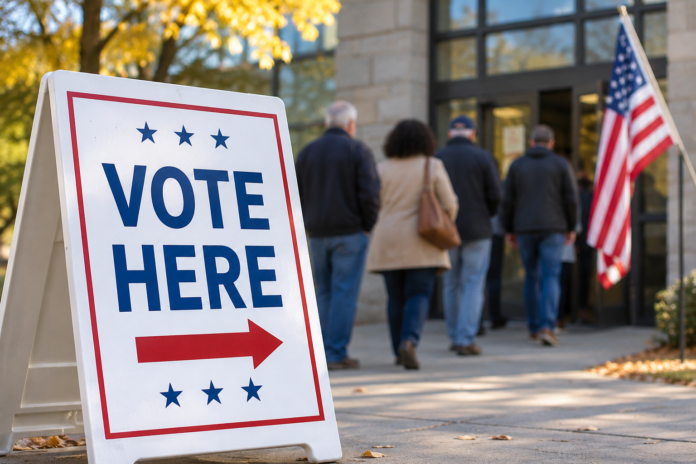
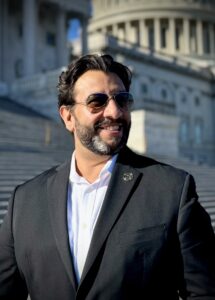
As voters head to the polls Nov. 3, Denver election officials are preparing for an election they hope will be uneventful — even as they plan for scenarios that once seemed incomprehensible.
Denver Clerk and Recorder Paul López said his office has expanded its contingency planning to address potential federal intervention, including by training election judges on how to respond to armed federal agents appearing at voting centers and by taking legal action.
Denver is a plaintiff in League of United Latin American Citizens v. U.S. Department of Homeland Security, which challenges the Trump administration’s authority to deploy armed Immigration and Customs Enforcement officers to polling places for routine immigration enforcement.
“I don’t know what it’s like to be a clerk and recorder in normal times,” López said. Since taking office in 2019, he has overseen elections during the COVID-19 pandemic; after the Jan. 6, 2021, attack on the U.S. Capitol; and amid disputes over federal involvement in election administration.
“It’s been the hardest time to be a clerk,” he continued. “But it’s also been the best time to ever be a clerk. The work is important.”
A Lawsuit Over Federal Authority
Denver joined LULAC, Common Cause and UnidosUS in filing the lawsuit on Sept. 10 in the U.S. District Court for the District of Columbia. Hennepin County, Minnesota, subsequently joined the case, and an amended complaint filed Oct. 7 added a claim under Section 11(b) of the Voting Rights Act, which prohibits intimidation, threats and coercion related to voting.
The lawsuit challenges a federal policy under which armed ICE officers could enter polling places to conduct immigration enforcement, including serving warrants. The administration has said it is not planning operations targeting polling locations while maintaining that agents could be present in particular circumstances.
López said the lawsuit seeks to establish legal protections before a confrontation occurs rather than waiting for election operations to be disrupted. At dozens of community meetings in recent months, he has heard concerns about the potential presence of federal agents at polling places. He also cited concerns raised by election judges.
“Based off of the statements from the Department of Homeland Security, based off of the environment, based off of these threats,” he said, “voters have become worried about showing up to vote.”
He attributed some election fears to claims that noncitizens are voting in elections, which he said are unfounded.
The plaintiffs argue that the federal policy conflicts with 18 U.S.C. § 592, which prohibits federal officials from bringing or keeping troops at a place where an election is being held. The lawsuit also challenges the policy under the Administrative Procedure Act.
The plaintiffs seek a declaration that the administration lacks authority to deploy armed officers to polling places for routine enforcement and an injunction restricting armed federal agents near polling places, ballot drop boxes and other locations where ballots are received or counted, subject to the statutory exception.
Planning for a Possible Confrontation
Years ago, Denver’s election-day contingency exercises focused on disruptions such as blizzards, power outages and natural disasters. Now, scenarios include legal challenges, federal intervention, armed agents at polling places and attempts to seize ballots.
“Anytime we hear of any kind of executive order, however ridiculous or scary it could be,” López said, the office “sits down as a team to consider how to respond.”
Election judges and supervisors have received training on identifying federal agents, distinguishing judicial warrants from other documents, communicating with authorities and following established protocols.
López said he has discussed plans for a hypothetical confrontation with Denver’s mayoral office, police chief and city attorney. If federal agents refused to leave an election facility, he said, he would contact local police. He expects officers to enforce the law, potentially including arresting agents who refuse a lawful order to leave.
“I’d rather not have that confrontation, but at the end of the day, that’s what this lawsuit’s about, too,” he said. “Let’s prevent it from happening.”
Drop Boxes and Access to the Ballot
Denver has extended its ballot drop-box network from about two dozen when López took office to 49 this year. Bipartisan teams monitor and empty the boxes.
During Denver’s most recent primary election, López said, about 72% of voters returned ballots through drop boxes. He estimated that approximately 4% voted in person, with roughly 9% returning ballots by mail.
Colorado sends mail ballots to active registered voters, who can return them through official drop boxes or voting centers. Ballots must be received by 7 p.m. on Election Day; a postmark alone does not satisfy the deadline.
“No lines, no postage, no drama,” he said.
A Role for the Legal Community
López urged lawyers and legal scholars to help election officials defend the electoral process, particularly in smaller and rural jurisdictions that may lack the resources to respond quickly to litigation.
“Not all elections offices are like Denver or New York or L.A. that are fully resourced,” he said.
Some jurisdictions lack in-house lawyers or the financial resources to challenge federal action in court. Attorneys can help fill in gaps by providing legal guidance and ensuring local election officials understand their authority and obligations.
“We can always use folks who know the law,” he said. “Our lawyers and constitutional scholars stand in a gap and defend democracy.”
López said the dedication of those who care about fair and free elections gives him hope.
“We have Republicans and Democrats alike and unaffiliated voters alike who are proud to work side by side,” López said. “Every step of the process, they put country before party.”
For López, the objective remains straightforward: an election in which voters can cast ballots and election workers can process and count them without disruption, even as officials prepare for the possibility of federal intervention.