



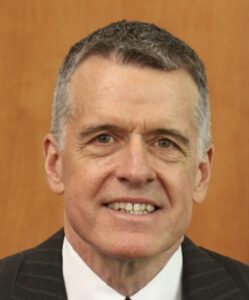
For Judge Michael Hegarty, mediation is a form of peacemaking as much as it is a legal tool.
“I have a passion for bringing peace into people’s lives,” said Hegarty, a neutral with JAMS. “Even in business disputes, it’s personal. People live it. They take it home to their families.”
Before and during his judicial career, Hegarty mediated conflicts within his church community, and his love for peace stems in part from his faith.
Hegarty served 19 years as a federal judge in the U.S. District Court for the District of Colorado, the last year of which he served as the first chief magistrate judge in the district’s history. On the bench, he conducted more than 1,400 settlement conferences, with a high success rate.
His private practice includes mediating, arbitrating and serving as a special master. “It feels a lot like what I did before,” he said. “Just not in the courthouse and not with the authority of a judge.”
Still, the pressure to reach resolution has increased. “I’m more frustrated now when it doesn’t get done,” he said. He reads documents from both sides “intensely” and often dreams about the work.
Hegarty’s approach to mediation is highly personal. When parties arrive entrenched in their positions, he spends “maybe a quarter of the time talking about the dispute,” he said. “Three-quarters is talking about who they are: what they believe, what motivates them.”
As with his days on the bench, he wants to ensure each party is heard. “Their story matters. I look them in the eye, and I listen.”
Hegarty ultimately treats mediation as a kind of “mini-trial,” where each side presents its case before he offers a candid assessment of what resolution could look like. “It’s not about intelligence,” he said. “It’s about being a dealmaker.”
If there’s one miscalculation he sees consistently from attorneys, it starts prior to mediation. “The biggest mistake is building unreasonable expectations into your client,” he said, as inflated demands or early assumptions can derail productive negotiation. “Come in with an open mind, willing to reconsider.”
After decades of resolving disputes, Hegarty said one truth remains constant: “People see the same facts differently.”
That’s why he aims to help others think a bit outside of themselves. “At the end of the day, I just want to give people a choice,” he said. “A lot of times, they see the wisdom in resolving the case.”
If not complete reconciliation, they can achieve “at least a truce,” he said. “A peace.”