



When Stephen Martinez’s conviction was vacated this year, following nearly three decades in prison, his family celebrated alongside the Denver district attorney.
Martinez’s release was the culmination of an intensive legal battle spearheaded by the Korey Wise Innocence Project at the University of Colorado Law School, in collaboration with a pro bono litigation team from Stinson in Denver. The case turned on evolving forensic science and, in particular, the dismantling of faulty medical assumptions around Shaken Baby Syndrome.
The Korey Wise Innocence Project began in 2001 as the Colorado Innocence Project. In 2015, the project was renamed after Korey Wise — one of the wrongly convicted teenagers in the Central Park Five case, now often called the Exonerated Five — made a gift to the organization. Wise was imprisoned more than 11 years before his conviction was vacated in 2002.
Since the early 2000s, KWIP has expanded from a volunteer screening effort into a full innocence organization with investigators, attorneys and policy staff working on wrongful conviction claims across Colorado, including cases involving disputed forensic science, eyewitness misidentification and recanted medical conclusions.
Martinez’s Conviction and Forensic Assumptions
Martinez’s case dates back to October 1998, when he was babysitting his girlfriend’s four-month-old daughter. The infant went into acute respiratory distress, and Martinez immediately called 911, attempting lifesaving measures until emergency medical services arrived. The baby died at the hospital. Martinez was subjected to an hours-long interrogation, despite having no history of violence. Soon after he signed a self-incriminating statement prepared by law enforcement, he recanted it.
At his trial in 2000, the prosecution’s medical theory relied on what was then considered unassailable forensic certainty: the simultaneous presence of three internal symptoms (subdural hemorrhaging, retinal hemorrhaging and brain swelling) was proof an infant had been violently shaken. The prevailing medical belief at the time dictated that the onset of these symptoms was instantaneous, incriminating whomever was last with the child.
“What was wrong about Shaken Baby Syndrome was it was almost more of a belief system than a scientific reality,” said Perry Glantz, a partner at Stinson who serves on KWIP’s board of directors. “They’re like, well, he was the only one there. It has to be him. There was really no investigation.”
Martinez’s case carried high stakes from its inception, as he was the first person convicted under a Colorado statute that mandated a sentence of life without the possibility of parole for this crime.
The Shifting Legal Landscape
In the years following Martinez’s conviction, research showed symptoms attributed to Shaken Baby Syndrome are not exclusive to non-accidental trauma and that natural medical conditions, including severe infections, respiratory illnesses and congenital defects, can produce similar outcomes.
In Martinez’s case, an exhaustive re-examination of the medical records by contemporary experts, first at the prompting of KWIP, revealed the baby had been suffering from a severe case of undiagnosed pneumonia.
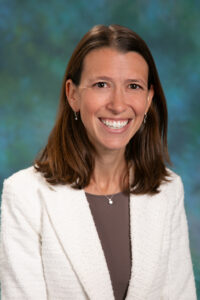
“At this point, Shaken Baby Syndrome is really a hypothesis that has been debunked and should no longer be accepted as valid science,” said Jeanne Segil, assistant director of KWIP.
“But it continues to be relied on in courtrooms,” she added. “If we want to protect children, we need to make sure that we’re not locking up the wrong people and separating children from their parents who have been good caregivers.”
The Mechanics of Institutional and Pro Bono Collaboration
Uncovering failures in the Martinez case required many steps and significant resources. KWIP operates a rigorous intake process to vet the high volume of requests the organization receives from incarcerated individuals.
“In the past year, 341 people reached out to us for assistance,” Segil said. “Our big questions are: Is there a viable claim of innocence here, and is there a way to prove it?”
When KWIP moves forward with an applicant, “we’re trying to get the trial transcripts, which can end up being thousands of pages,” Segil said. “We come back together as a team and decide whether it’s a case where we can fully commit to taking on this client.”
For a leanly staffed nonprofit, partnering with a major firm like Stinson for the Martinez case provided the operational infrastructure necessary to manage massive records and coordinate with top-tier medical experts. Stinson attorneys worked closely with Segil, independent counsel Seth Temin and volunteer law students.
“I’m not a criminal defense lawyer. I’m a civil litigator,” Glantz said, the Stinson partner. “To support an effort like this, though, is a privilege, and Stinson was very supportive.”
The resulting post-conviction petition was so compelling it prompted a collaborative review by the Denver District Attorney’s Conviction Review Unit (CRU). The CRU retained its own independent medical experts, who concurred with KWIP’s determination that the medical evidence used to convict Martinez in 2000 was scientifically invalid.
Segil said, “The Denver district attorneys realized that this was a case where the just outcome was to agree and to vacate the conviction. The time frame was so much shorter than this would have been if we were in an adversarial position.”
Sustaining the Institutional Pipeline
While the courtroom advocacy is executed by staff attorneys and experienced pro bono partners, the organizational engine behind KWIP is heavily supported by students at the University of Colorado Law School.
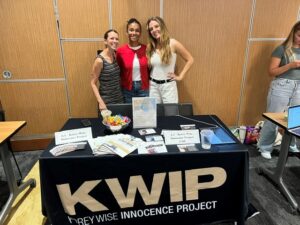
For some, the presence of the innocence project is a driver for selecting the law school. Law students Taylor Pruski and Jamilah Fofana served as co-presidents of the KWIP Student Group during the last academic year, organizing awareness campaigns, legal panels and letter-writing initiatives.
Pruski recalled, “I had heard about Korey Wise before attending law school, and it was a big factor for me in deciding to want to come to Colorado Law. I had done wrongful conviction work prior to law school and was excited to see an organization that was holding that same mission and allowing students to get involved in that during law school.”
Fofana agreed: “Seeing all of the stories of clients that they’ve helped and how life-changing it can be for those individuals — and what it means to them, their families and their fundamental rights — was very powerful and moving to me. It brings the work and the law back down to earth and grounds it in something real. It reinspires that passion that you come into law school with, that kind of gets dimmed through classes and everything.”
Rebuilding After Three Decades
The order vacating Martinez’s conviction was handed down on April 21. “As an attorney, I feel like there’s nothing like it,” Segil said. “Just to see a client come home after 27 years and get to be reunited with his family — that means everything to us.”
The focus for Martinez and his advocates has shifted toward community re-entry. KWIP has established public fundraising platforms to support Martinez’s housing, daily necessities and medical care. Martinez suffers from advanced diabetes; an underlying infection resulted in the amputation of one of his legs while incarcerated.
The KWIP legal team will be filing for state compensation under Colorado’s exoneration statutory framework, alongside an active civil rights lawsuit spearheaded by separate counsel regarding his medical treatment in custody.
For the students who watched the case, the victory provides a blueprint for their future careers. Fofana said, “I definitely want to be involved in criminal defense, and I’m interested in appellate work. I’d also like to get involved more in the re-entry space because that’s also something that’s overlooked a lot. Especially with innocence cases, when people are just released day-of or the next day, they don’t have any resources or programs to help them re-enter the community. I want to be part of that work however I can.”